


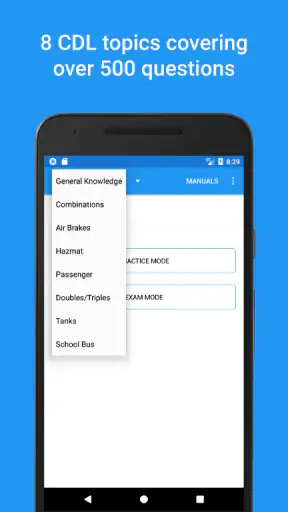
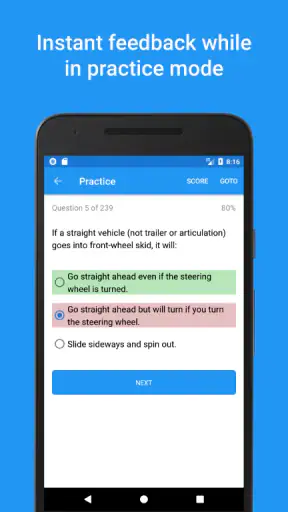
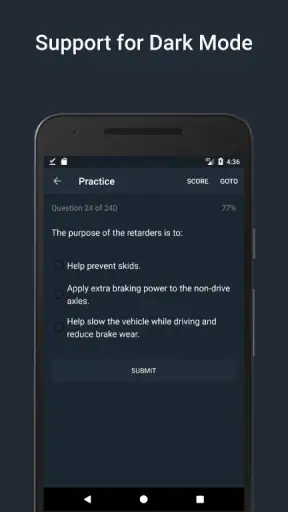
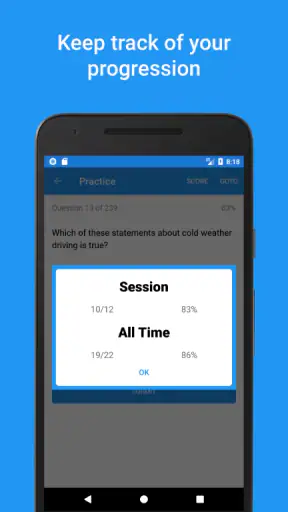
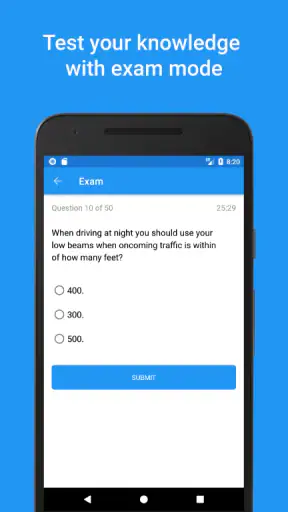
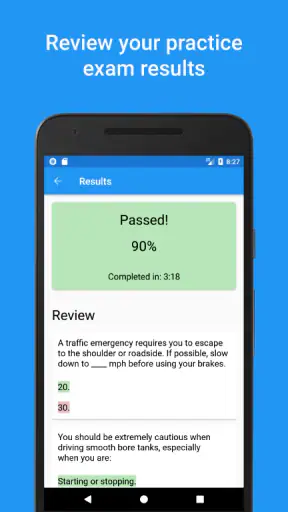
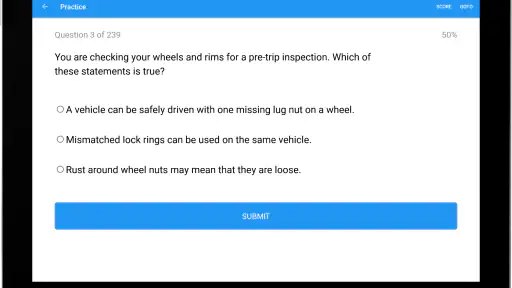
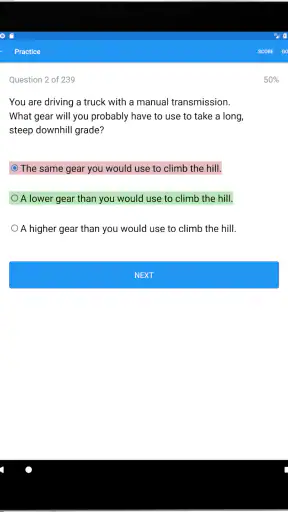
Preparing for a commercial driver’s license knowledge test can feel oddly difficult when study time comes in short, uneven pieces. I found CDL Prep most useful in exactly that situation: it turns spare minutes into focused practice instead of asking me to sit down with a thick manual for a long session. It is an education app from Jeffrey Diaz, built around preparation for the state General Knowledge CDL exam, and its straightforward purpose is also its main strength.
I would not treat it as a complete replacement for an official driver handbook. I would use it as a practice companion: something to open before work, during a break, or after reading a section of the manual. That distinction matters. The app can help reveal which subjects need more attention, but the official material remains the better authority for wording, state-specific rules, and the full scope of licensing requirements.
How CDL Prep fits into a shared household routine
A realistic example is a household where one person is working toward a commercial license while another person regularly uses the same Android device. The learner may have only ten minutes before leaving for a shift, then another short window in the evening. In that setting, a compact quiz app is easier to share than a printed book left open on a kitchen table. I could pick up the device, practice, and hand it back without rearranging the household’s routine.
That convenience does not mean the app manages multiple learners. I would not assume separate profiles, progress tracking for different people, or family coordination tools. If two people use the same device, the practical solution is simple but manual: agree on who is studying, keep notes outside the app, and avoid treating an answer history as a reliable record for more than one person.
This is an important trade-off. A dedicated course platform may be better for a training group that needs shared assignments, instructor oversight, or clearly separated accounts. CDL Prep makes more sense for an individual learner who wants immediate practice without turning the household device into a formal classroom.
The app is free, which removes an obvious barrier for someone testing a study method before spending money on a course. Its Everyone content rating also makes it suitable for a general household device from an age-classification perspective, although the subject itself is aimed at people preparing for commercial driving knowledge requirements. I would still keep the learner’s actual goals in mind rather than assuming that an age label makes the material appropriate for every child or casual user.
Starting without making the device the whole study plan
My preferred setup would be to place the app beside the state’s official CDL handbook, not in front of it. First, I would read a small section in the handbook. Then I would use the app to test recall. When I missed something, I would write down the topic instead of simply tapping through until I received a better score. That small change turns practice from guessing into diagnosis.
There is a useful boundary here: a quiz result tells me how I performed on the questions presented, not whether I am fully ready for the real examination. I would avoid using a good session as permission to skip sections of the manual. Conversely, a poor session is not a reason to panic; it is a signal to return to the relevant material and try again more deliberately.
For a shared device, I would also keep personal notes in a separate notebook or notes application. That prevents one learner’s reminders from being confused with another person’s. It also makes it easier to record the exact handbook section that needs review, which is more useful than remembering only that a question felt difficult.
The app requires Android 6.0 or later, so compatibility should be checked before planning a household study routine around an older phone or tablet. On a newer device, the modest requirement should make it practical for many existing Android users. Still, I would not promise that every old device will provide a comfortable experience simply because it meets the operating-system threshold; screen size, battery condition, and general responsiveness can affect short study sessions.
Coordination when more than one person is involved
CDL study can involve a surprising amount of coordination. A partner may need the device for work, a family member may be helping with transportation, or someone may be quizzing the learner aloud. The app works best when its role is agreed in advance. One person can complete the practice, while the other uses the missed topics as prompts for conversation rather than trying to interpret the app as a shared classroom.
I would use a simple routine: choose one topic before opening the app, complete a focused session, and discuss only the questions that caused hesitation. This avoids a common problem with mobile practice, where the learner keeps answering questions without understanding why an answer is correct. The person helping does not need to know every answer; they can simply ask the learner to explain the rule in their own words and then verify it against the handbook.
That workflow is especially useful when the device belongs to the household rather than the learner. It reduces the temptation to leave the app open indefinitely and gives everyone a clear stopping point. It also respects the fact that CDL preparation is individual: one person may need general knowledge review, while another may be studying a different part of the licensing process.
I would not expect the app to coordinate appointments, paperwork, driving practice, or communication with a school. Those tasks remain outside its scope. If a learner needs reminders, shared calendars, instructor feedback, or records that another person can inspect, a separate tool will be necessary. The app’s value is concentrated in question practice, not in managing the entire path to a commercial license.
What the practice format does well
The biggest advantage is immediacy. Instead of deciding which pages to revisit, I can open a practice session and discover where my recall is weak. That is more efficient than rereading everything equally. For a learner who already has access to the correct study material, the app can act as a filter: it helps identify what deserves another look.
I also like the possibility of using it in different modes of attention. A short session can be a warm-up before a longer study period, while a more deliberate session can follow handbook reading. The same basic tool can therefore support both quick recall and structured review, provided I resist the urge to measure progress only by how many questions I answer.
Its popularity gives it some practical reassurance. CDL Prep has an average rating of 4.6 from around 5,700 ratings, with more than 2,700 written reviews and over a million installs. I see those figures as evidence that many people find the format useful, not as proof that it matches every state’s exam perfectly or that it can replace official guidance.
The app’s current version is 9.13, and it has been available since June 11, 2014. Longevity can be encouraging for a study utility, but it also reinforces why I would compare practice material with current state documentation. Licensing rules and exam wording deserve careful attention, and a long-running app should still be treated as one part of a broader preparation process.
Where the app can create false confidence
Quiz apps are good at making progress visible, but visible progress can be misleading. Recognizing an answer after seeing familiar wording is not the same as being able to explain the rule under pressure. I would therefore change the way I practice: after answering, I would cover the choices and explain the principle aloud, especially for questions I got right by elimination.
Another limitation is concentration. A phone encourages rapid tapping, and rapid tapping can turn study into a reflex. If I notice myself choosing answers before reading the full question, I would stop and return to the handbook. The app is not at fault for that habit, but its convenience makes it easy to fall into.
I would also be cautious about using it as the only preparation resource for someone with little prior knowledge. Beginners often need explanations, diagrams, context, and the exact language used by their state. A question-and-answer tool can show a gap without fully teaching the underlying concept. In that case, a classroom, instructor-led course, or comprehensive manual may be the better starting point, with CDL Prep added later for reinforcement.
It is also not the right choice for someone seeking behind-the-wheel training. Knowledge-test preparation and practical vehicle skills are different needs. No amount of tapping through questions substitutes for supervised driving, vehicle inspection practice, or guidance from a qualified trainer. I would use the app only for the written-knowledge side of preparation.
Age, trust, and sensible household boundaries
The Everyone rating makes the app uncomplicated from a general content standpoint, but I would separate content suitability from licensing readiness. A younger household member might be able to open the app, yet that does not mean the material is relevant to their immediate goals. If several people share the device, a quick conversation about whose study session is taking place is more useful than assuming the app will enforce boundaries for us.
I would not build a family rule around features that are not clearly part of the experience. There is no reason to expect the app itself to provide parental controls, account separation, or a trusted adult’s view of progress. For a household that needs those functions, the boundary has to come from device settings, personal agreements, or a separate learning service.
Trust also matters in how results are interpreted. A family member should not treat a high practice score as a guarantee that the learner will pass, nor should a low score become a judgment about their ability to drive. The useful question is narrower: which subject should be reviewed next, and can the learner explain it without relying on the answer choices?
Because the app is free, it is easy to let everyone install it or pass the device around casually. I would still assign it a clear purpose. The learner should know whether they are doing a serious review session, helping someone else test questions, or simply exploring the app. That small distinction prevents casual use from being mistaken for meaningful preparation.
A practical study method I would recommend
I would begin with a baseline session without looking up answers. The goal would not be to chase a high result, but to identify patterns. If several mistakes belong to the same topic, I would stop taking random quizzes and return to that topic in the official handbook. After reading, I would repeat practice and compare my explanations, not just my score.
For shared use, I would record three things outside the app: the topic, the reason for the mistake, and the handbook section used to correct it. This is more valuable than a vague note saying “review CDL.” It also keeps the app from needing to serve as a personal filing system. A learner can then hand the device to someone else without losing the structure of their own study plan.
A second useful technique is to separate recognition from recall. On one pass, answer normally. On another, pause before viewing all choices and state what you think the rule requires. This exposes questions that feel familiar but are not fully understood. It takes longer, so I would use it for difficult areas rather than every question in every session.
Finally, I would schedule a quiet review away from the exam date rather than relying on one last burst of practice. The app is convenient enough for frequent short sessions, but convenience should support consistency, not procrastination. If I could answer correctly only when the wording looked familiar, I would consider that a warning to study from the handbook again.
Who should choose it, and who should look elsewhere
I think CDL Prep is a good fit for an independent learner who already knows which state exam they are preparing for and wants a free way to test general knowledge. It is particularly practical for people with irregular schedules, because a short phone session is easier to fit around work and family responsibilities than a fixed study block.
It is also useful for a learner who wants a second layer of accountability. A partner or friend can ask what was missed, while the learner remains responsible for checking the underlying rule. In that role, the app supports coordination without pretending to replace an instructor.
I would choose something else, or use something else alongside it, if I needed detailed teaching rather than practice. The same applies to someone who needs state-specific clarification, formal progress reporting, accessible instruction tailored to a particular learning difficulty, or practical driving preparation. A paid course may justify its cost when it supplies explanations and guidance that a compact quiz tool cannot provide.
My recommendation is therefore conditional but positive: use it as a practice instrument, not as the entire education plan. Read the official material, verify important rules, and treat every missed answer as a prompt for understanding rather than a score to hide.
My household verdict
After considering how it fits on a shared device, I see CDL Prep as a focused and approachable study aid. It is free, aimed at general knowledge CDL preparation, and simple enough to use without reorganizing a household around it. The developer is Jeffrey Diaz, and the app’s broad adoption suggests that its basic approach has been useful to a substantial number of learners.
Its limitations are just as important. It does not become a handbook, instructor, driving school, or household account manager simply because it lives on a phone. Shared users will need their own boundaries, notes, and coordination. Learners must also confirm current requirements through authoritative state resources instead of assuming that practice success guarantees exam readiness.
For someone who wants quick, repeatable question practice on an Android device running version 6.0 or later, I would recommend giving it a try. I would keep the official manual beside it, review mistakes slowly, and avoid letting a familiar quiz pattern create false confidence. Used that way, it earns its place in a sensible study routine without asking it to do a job it was never meant to handle.


